A Day in the Life Working on a VR Production
15 Oct, 2025


2025 Copyright @ Visual Impact.
All Rights Reserved
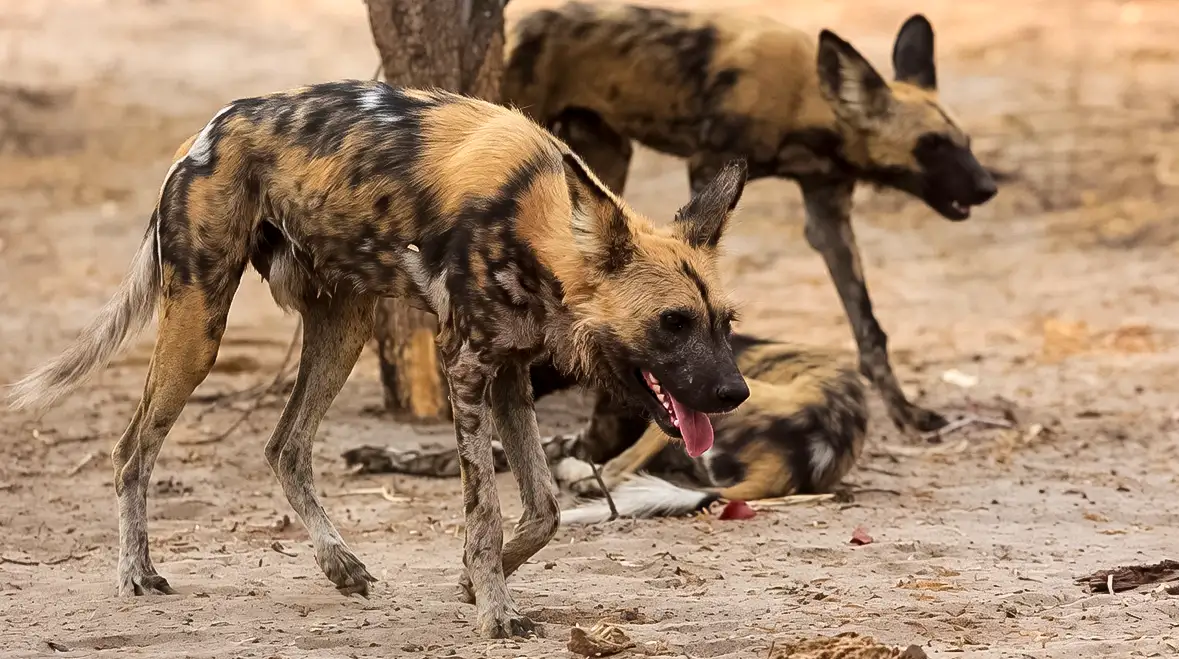
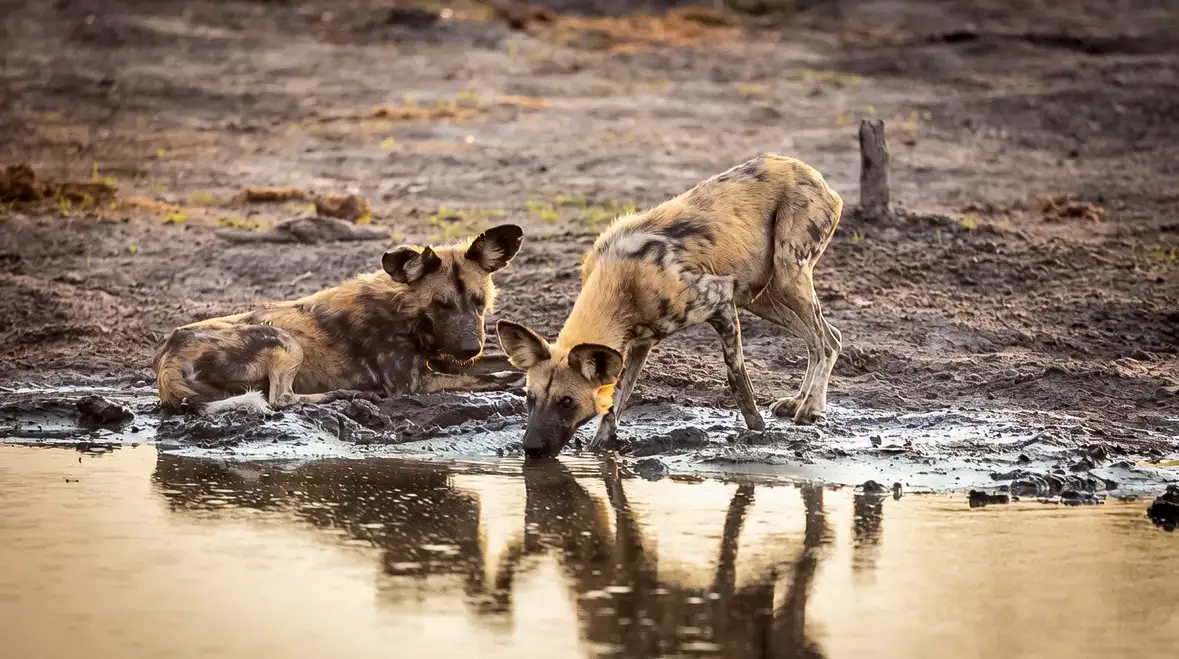
African wild dogs are among the most difficult predators to film. They are intelligent, unpredictable and almost constantly in motion, often moving at speed through dense bush where a camera crew has only seconds to react. For wildlife cinematographers, following a pack is not only a camera challenge. It is a test of endurance, planning, fieldcraft, teamwork and technical improvisation.
I experienced this first hand while working on the landmark BBC wildlife documentary A Wild Dog's Story, which followed the life of an African wild dog named Newky in the Moremi region of Botswana's Okavango Delta. I worked as assistant to renowned wildlife cinematographer Mike Holding, who served as Director of Photography on the production.
This article offers a rare look at old school 16mm wildlife filmmaking, vehicle based camera engineering, GPS assisted fieldwork and the discipline required to capture fast moving predators in one of Africa's great wilderness areas.
Among Africa's predators, few animals are as challenging to film as African wild dogs. Unlike lions, which may spend long periods resting, wild dogs cover vast distances at speed, weaving through dense bush with astonishing agility. For wildlife cinematographers, keeping up with them is a relentless test of endurance, planning and technical improvisation.
At the time, A Wild Dog's Story was groundbreaking for several reasons. Firstly, it attempted to reconstruct the real life story of an actual wild dog based on long term behavioural observation. Secondly, the production included Dr Tico McNutt, who had studied that specific pack extensively in the field.
Including a scientist as an on screen contributor in a pure natural history strand was unusual for a BBC Natural World production at the time and helped establish a format that many later wildlife documentaries would adopt.
Technically, the production belonged to an entirely different era of filmmaking.
Today, wildlife cinematographers work with lightweight digital cameras capable of recording for hours. During A Wild Dog's Story, we were shooting on 16mm Arriflex High Speed SR II film cameras using long telephoto zoom lenses. Every roll of film had limited duration. Every magazine change mattered. There was no instant playback, no digital monitoring and no opportunity to verify footage in the field.
Everything depended on experience, discipline and teamwork.
Most of the filming was done from customized filming vehicles. This was not simply a matter of convenience. It was an operational necessity.
Wild dogs move through the bush extremely fast. If we had to stop the vehicle, climb out, unpack a tripod, mount the camera and prepare to shoot, the action would already be over by the time we were ready. Wildlife filmmaking often unfolds in seconds, and the crew must be capable of reacting instantly.
There was also the issue of safety.
We were operating inside a protected wilderness area where encounters with lions, leopards, hyenas, elephants, buffalo and numerous other dangerous animals were part of daily life. Working from vehicles provided a significantly safer operating environment than being on foot.
But perhaps most importantly, wild animals are generally far more comfortable with people inside vehicles than humans moving around outside them. Animals often perceive a vehicle as a single non threatening object, whereas a human on foot immediately attracts suspicion and alarm.
Our production typically operated with two filming vehicles, each carrying two people: the primary cameraman and the driver, who also functioned as camera assistant.
Mike had developed an exceptionally clever vehicle based filming system specifically for this kind of work. Instead of relying on traditional tripods, he designed a setup using bazooka mounts and tall boy support systems integrated directly into the vehicle.
More impressively, he engineered a hydraulic mechanism that allowed the camera mount to be lowered rapidly from the vehicle onto the ground.
This achieved two major advantages.
Firstly, a support mounted directly onto the ground was vastly more stable than one attached to an unstable vehicle chassis only. Wildlife filming vehicles can easily shake due to wind or an occupant moving just a little bit.
Secondly, the lowered hydraulic mount enabled us to film at eye level with the wild dogs rather than from the typical elevated perspective seen in many wildlife documentaries. That low angle viewpoint created a far more immersive and intimate visual experience, placing the audience directly into the world of the pack.
The camera itself, complete with lens, battery and loaded film magazine already attached, was stored in a padded waterproof and dustproof aluminium box within immediate reach at the rear of the vehicle.
This level of preparedness was essential because wildlife filmmaking is often both rapid and physically rough. Equipment had to be secured with extreme care. A loose lens case or unsecured battery could easily become damaged while driving aggressively through dense terrain.
And aggressive driving was often unavoidable.
We seldom followed the dogs along established roads. Most of the time we were bundu bashing through thick vegetation, trying desperately to anticipate where the pack was heading so that we could get ahead of them.
This was crucial from a storytelling perspective.
If one only follows wild dogs from behind, every shot begins to look the same. Editors require visual variety: front angles, side profiles, wide establishing shots and reverse movement. Our goal was therefore to leapfrog the animals continually and intercept them from new directions.
That was far easier said than done in the dense bush of the Moremi region.
Once visual contact with the pack was lost, relocating them could become extraordinarily difficult. Wild dogs move rapidly and silently, and the thick vegetation often concealed them completely within moments.

Flat tyres were another constant problem.
The terrain was unforgiving, littered with sharp hidden broken tree stumps and logs. We therefore had to develop systems for changing punctured tyres extremely quickly because falling behind the pack even briefly could mean losing them entirely.
As Mike's assistant, my own responsibilities extended far beyond simply helping with the camera.
I assisted with general vehicle maintenance, loading and unloading film magazines, storing exposed film safely, logging shots, filling in lab reports and cleaning equipment constantly to combat the relentless dust of the Okavango environment.
Film workflows required immense discipline.
Unlike modern digital productions, where storage media can be reused and footage reviewed immediately, exposed film represented irreplaceable material. Damaging or contaminating a magazine could potentially destroy footage that might never occur again.
Communication between cameraman and driver was absolutely critical.
The driver sat lower inside the vehicle and often had limited visibility of the animals. His primary focus had to remain on safely navigating obstacles such as fallen trees, termite mounds, soft sand, mud and aardvark holes. Any of these could bog us down, damage the vehicle or injure crew members.
The cameraman therefore continuously guided the driver verbally, directing positioning so that the camera could obtain the best possible angle quickly enough before the action disappeared.
Once the vehicle stopped, the driver assistant had to move immediately.
He would rapidly deploy the hydraulic mounting system, help secure the camera into position, power the system up and prepare for filming. During quieter moments he also handled film magazine swaps, secured equipment before rapid movement and ensured that everything remained operational under extremely demanding conditions.
The two filming vehicles remained in continuous radio contact with one another. This communication system allowed us to coordinate coverage efficiently and avoid driving into each other's shots.
It also enabled a leapfrog strategy.
One vehicle could move ahead while the other remained with the dogs, after which positions would reverse. This allowed us to maintain consistent visual coverage while maximizing shot diversity.
Both vehicles were also equipped with GPS systems, which at the time was still relatively innovative for wildlife filmmaking operations.
The GPS units proved invaluable during night navigation through the bush. Seasonal and lunar cycles often dictated our filming schedule.
Wild dogs breed only during certain periods of the year, meaning key behavioural events such as mating, denning and pup rearing could only be filmed during narrow seasonal windows.
Similarly, hunting opportunities varied dramatically according to moon phase. Wild dogs frequently hunt during periods of bright moonlight, when visibility conditions favour their extraordinary eyesight.
During darker nights, hunting activity changed significantly compared to periods of bright moonlight. During those lunar phases, they predominantly hunted during the day. Therefore, successfully filming a hunt and kill was more likely to happen during dark moon phases.
The GPS technology also allowed us to download route data and overlay our daily movements onto maps of the Moremi region. Over time, clear behavioural patterns began to emerge, especially once the data was associated with lunar phases and wind direction.
We could see preferred travel corridors, hunting zones and resting areas used repeatedly by the pack. This information became enormously valuable because it allowed us to predict where the dogs were likely to move next, dramatically improving our chances of being in the correct place at the correct time.
Looking back, A Wild Dog's Story was far more than simply a wildlife documentary production.
It was an exercise in logistics, engineering, fieldcraft, animal behaviour, teamwork and endurance.
Working alongside Mike taught me that successful wildlife cinematography depends on far more than operating a camera well. One must understand animal behaviour, terrain, weather, mechanical systems, storytelling and crew coordination simultaneously.
The camera itself is only one part of a much larger ecosystem of problem solving.
What made the production particularly special was the fact that it combined rigorous natural history with emotionally engaging storytelling centered around a real individual animal. That approach helped shape the future direction of many subsequent blue chip wildlife documentaries.
Even today, years later, I still remember the sound of wild dogs moving through the bush before sunrise, the chaos of trying to reposition vehicles through dense mopane woodland, and the intense concentration required when everything suddenly happened at once.
Wildlife filmmaking often appears calm and poetic on screen. Behind the camera, however, it is frequently controlled chaos, with the odds of success heavily stacked against you. You only get one chance to get it right.
For young DOPs and wildlife filmmakers, the lesson is clear: great wildlife cinematography is not only about the camera. It is about preparation, systems, movement, fieldcraft, teamwork and the ability to react when nature suddenly gives you the moment.
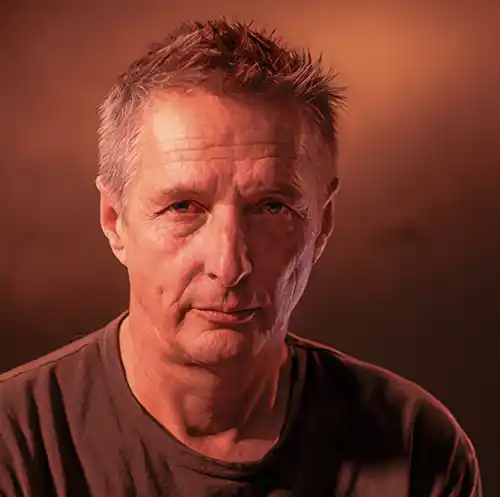
Jan du Toit is a South African wildlife cinematographer, documentary cameraman, filmmaker and visual storyteller. He qualified as a graphic designer and filmmaker from Pretoria Technikon and has continued his academic development through postgraduate study at the University of Cape Town.
Raised on a farm in central South Africa, Jan developed a deep love of nature, exploration and learning from an early age. That background, combined with a desire to create powerful images, led him into a career filming across more than 50 countries, from the natural landscapes of the Okavango Delta in Botswana to conflict affected environments such as Kabul, Afghanistan.
As a freelance documentary cameraman, Jan has worked for major international broadcasters including National Geographic Television, Discovery Channel, Animal Planet, CNN and the BBC. His work has given him rare access to different cultures, environments and human experiences, as well as a deeper awareness of the environmental challenges facing society.
Jan’s visual approach is informed by a wide range of interests, including natural science, history, music, journalism, film and art. He is inspired by the Dutch and Flemish Masters’ use of light, as well as by artists and photographers such as Obie Oberholzer, Nick Brandt, Alejandro Chaskielberg and David Goldblatt.

Visual Impact South Africa is one of the largest broadcast and film equipment rentals, sales and service companies in South Africa. As part of the international Visual Impact group of companies, we have access to a wide range of equipment and in-house technical expertise.
Visual Impact South Africa, with offices in Johannesburg and Cape Town, provides broadcast and production equipment rentals, workflow solutions, and technical support across Africa, including mobile editing and data management services. The company represents leading global brands such as Sony, ARRI, RED, Canon, and Blackmagic Design, and has facilitated major reality TV productions like I’m a Celebrity, Idols SA, MasterChef SA, and The Bachelor Germany.
Follow Us