A Day in the Life Working on a VR Production
15 Oct, 2025


2025 Copyright @ Visual Impact.
All Rights Reserved
14 mins read

When a commercial looks effortless on screen, it is easy to forget how much planning, patience and improvisation may have gone into a few seconds of footage. That is especially true in wildlife cinematography, where the subject cannot be directed, repeated or controlled in the way a normal film scene can.
I experienced this first hand when I was commissioned to shoot wildlife footage for a Sony Alpha series camera commercial featuring German football legend Manuel Neuer. The commercial was filmed on a private game reserve in the North West Province of South Africa and combined high end advertising cinematography with genuine wildlife behaviour, a notoriously difficult combination to pull off.
My responsibility was to capture slow motion footage of black wildebeest running directly towards camera. That alone would already have been technically challenging. But the client's brief went even further.
They wanted the herd to run in an elongated S shaped formation. At times, the animals needed to face directly towards camera. Moments later, the herd had to curve to reveal their left sides, and then curve again to reveal their right sides. In other words, the herd had to move like a choreographed ribbon through the landscape.
Anyone familiar with African wildlife filming will immediately understand the problem: wild animals do not take direction.
The concept seemed deceptively simple.
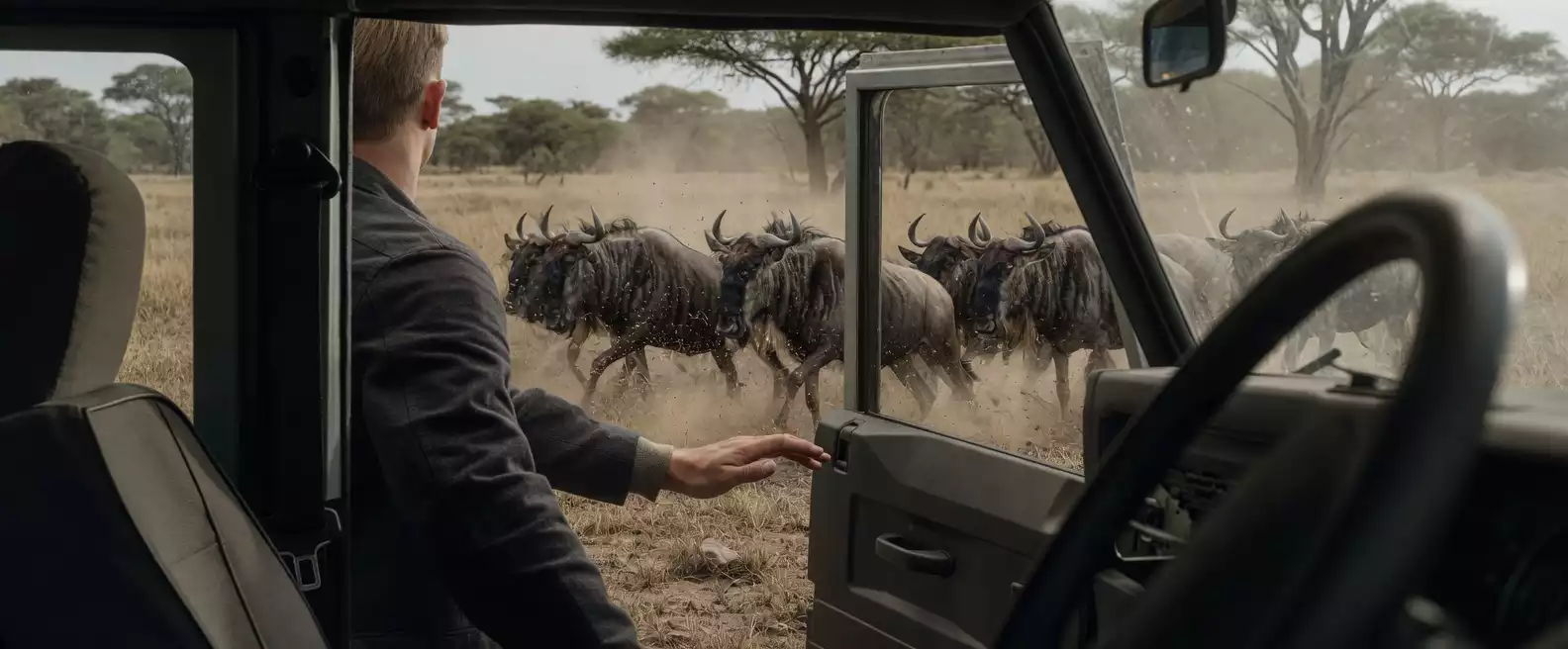
Neuer would ride as a passenger in a safari vehicle driven by a game ranger. Between them would sit the new Sony camera. They would encounter a herd of running black wildebeest, which Neuer would proceed to photograph.
As he shot stills, the animals would gradually slow down and eventually become frozen in time, allowing him to step out of the vehicle and walk amongst them.
On paper, it was a strong visual idea. In the field, it became a complex test of animal behaviour, wind direction, camouflage, long lens wildlife filming, slow motion wildlife cinematography and camera discipline.
The animals on the primary reserve were not habituated to vehicles or people. They were genuinely wild black wildebeest.
That distinction matters enormously.
The herd on the main reserve had recently been hunted. They were extremely skittish and highly reactive to human presence. Animal handler Luke Cornell and I could not get closer than roughly 300 metres before the animals exploded into full speed flight.
The difficulty was not merely getting the wildebeest to run. That part was easy. The challenge was controlling how they ran, where they ran, and doing so close enough to camera to achieve dramatic telephoto close ups.
Initially, the situation looked impossible.
Every approach attempt ended the same way. The animals would spot us long before we could get into position and disappear over the horizon in a cloud of dust. Worse still, they never ran in the elegant S shaped formation the client wanted. Instead, they scattered unpredictably at high speed.
Time was running out, and it became increasingly clear that we would not achieve the required footage at the main location.
At that point, Luke and I began searching for alternatives.
Eventually, he located a small provincial reserve not far from the principal filming location. There was a smaller herd of black wildebeest there that had not been subjected to hunting pressure and were consequently less fearful of humans.
That gave us a fighting chance.
However, "less wild" does not mean tame.
The Afrikaans word "wildebeest" literally translates to "wild beast" or "wild cattle," which is a very accurate description. Black wildebeest are powerful, unpredictable animals. There are documented cases of them killing humans, and their sharply curved upward pointing horns can be extremely dangerous.
Even with a calmer herd, we still faced the central challenge: how could we persuade genuinely wild animals to run towards camera in a controlled S shaped pattern?
The answer came from knowledge I had learned long before I ever picked up a professional camera.
I grew up on a farm in the Free State, where my father taught me a great deal about animal behaviour. One lesson in particular stayed with me over the years. He often pointed out how our herds of springbok and blesbok consistently grazed into the prevailing wind. More importantly, when startled, they almost always ran into the wind rather than downwind.
His explanation was simple but profound.
Mammals rely heavily on their sense of smell for survival. By running into the wind, they maximise their chances of detecting predators hidden ahead of them because scent is carried toward them on the airflow.
That behavioural principle became the key to solving our problem.
Instead of trying to force the wildebeest into random movement patterns, we would work with their instincts.
Luke and I developed a very deliberate strategy.
First, we reduced the crew to the absolute minimum: only Luke and myself. Too many people would increase the chances of the animals detecting us prematurely.
Next, I identified an S shaped animal path winding naturally through the veld. Crucially, the track curved directly toward my intended camera position. Behind me stood a dense thorn thicket that would help conceal my silhouette.
We then studied the prevailing wind direction carefully. If our understanding of wildebeest behaviour was correct, the herd would instinctively turn and run into the wind once pressured.
I positioned myself extremely low to the ground and camouflaged both myself and the camera with hessian and camouflage netting. Luke moved far behind the herd so that the animals would be positioned between him and me.
We remained in radio contact throughout.
Once I was fully set up and ready, Luke slowly began approaching the herd on foot.
The tension during those moments was extraordinary because everything depended on the animals reacting exactly as we predicted. Wildlife filmmaking often involves enormous amounts of waiting followed by a few seconds of absolute intensity.
Then it happened.
The wildebeest spotted Luke, became nervous, turned into the wind exactly as anticipated, and started running along the winding track directly toward my hidden camera position.
Suddenly, all theory became reality.
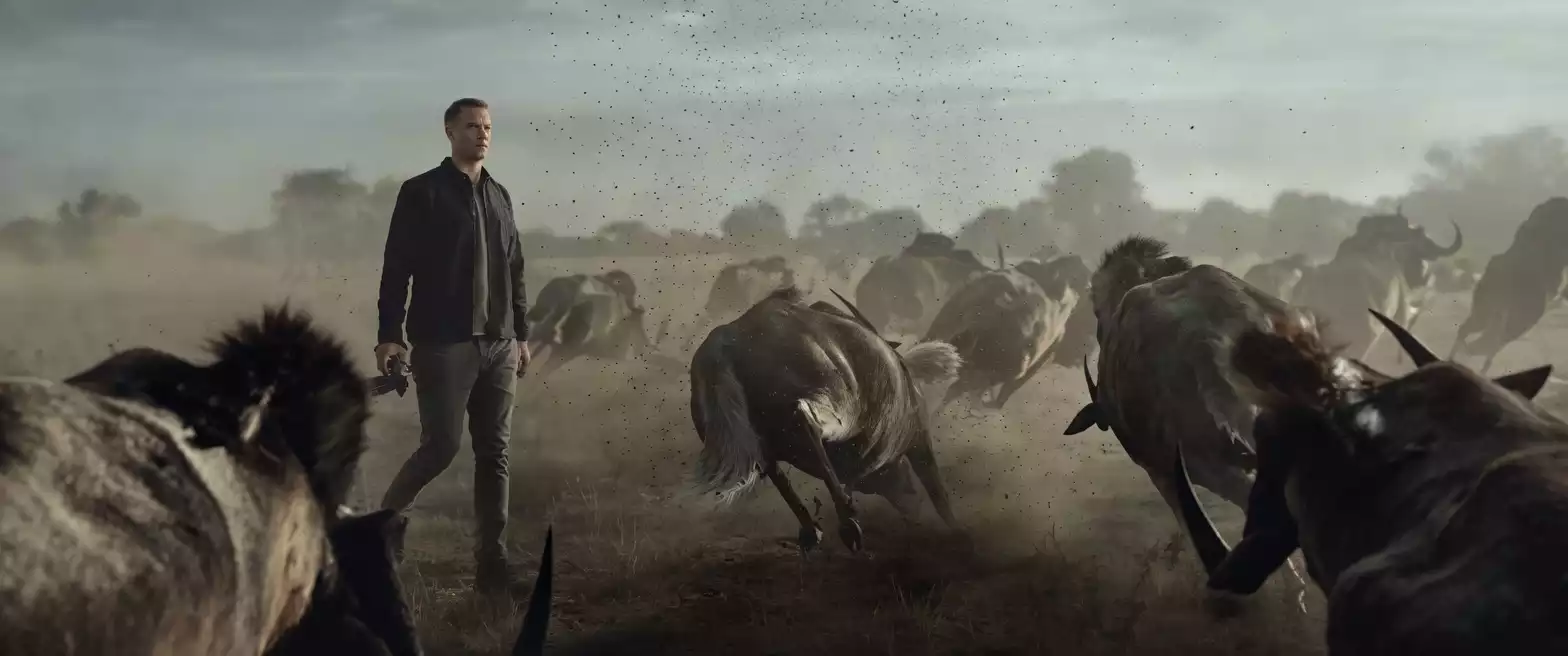
At that point, my entire focus shifted to operating the camera flawlessly. I had to roll immediately, maintain composition on a long telephoto lens, and execute a highly demanding focus pull as the animals thundered toward me at speed.
There are few things more technically unforgiving in cinematography than tracking fast moving wildlife on an ultra long lens in slow motion. Depth of field becomes razor thin, and even the slightest focus error becomes painfully obvious.
Complicating matters further was the fact that the footage would later undergo visual effects processing. The motion therefore needed to look crisp and highly detailed, without excessive motion blur.
To achieve this, I shot on an Arri Alexa Mini at 200 frames per second, paired with a Century Optics rebuilt Canon 150 to 600mm servo zoom lens mounted on an O'Connor head and baby legs tripod.
The Alexa Mini produced beautiful images. Combined with the Century Optics lens, the footage had a rich cinematic quality that integrated perfectly with the rest of the commercial, which was also being shot on Alexa Minis in both South Africa and Germany.
From a wildlife cinematography perspective, however, I found the Alexa Mini deeply frustrating.
Unlike dedicated wildlife camera systems designed for rapid reaction shooting, the Alexa Mini has an extremely slow boot up time. In wildlife filmmaking, moments appear and disappear instantly. Waiting for a camera to power up can mean missing the shot entirely.
Battery consumption was another major issue. The camera drained V lock batteries rapidly, even while in standby mode. I therefore had to carry a backpack loaded with spare batteries and swap them constantly throughout the shoot.
Every battery change introduced another painful delay while waiting for the camera to reboot, precisely the kind of interruption wildlife cinematographers dread.
I chose to shoot at approximately f11 to maximise usable depth of field on the long end of the lens. Because of the high frame rate and elevated shutter speed required for crisp motion rendering, exposure became another balancing act, particularly during early morning light conditions.
We deliberately filmed shortly after sunrise because the low angle sun created beautiful three quarter backlighting on both the animals and the tall grass.
That backlight added texture, separation and atmosphere to the footage while enhancing dust and movement in the frame.
When everything finally aligned, the light, the wind, the animal behaviour and the camera operation, the results were extraordinary.
What initially seemed almost impossible had become achievable through patience, fieldcraft, behavioural understanding and careful planning.
That experience reinforced something I have learned repeatedly throughout my career in wildlife cinematography: technical skill alone is never enough. Understanding animal behaviour is just as important as understanding lenses, exposure or camera systems.
In many ways, wildlife cinematography resembles documentary filmmaking, hunting and natural science all at once. Success often depends less on forcing nature to comply and more on understanding the invisible patterns that already exist within it.
In this case, a childhood lesson learned on a Free State farm ultimately became the crucial ingredient that allowed us to deliver the client's brief.
Looking back, the success of the shoot did not come from a single piece of equipment or one technical trick. It came from combining cinematography with fieldcraft, local knowledge, animal behaviour and careful timing. For young DOPs and wildlife filmmakers, the message is clear: the camera is only one part of the craft. The real work often begins with learning how to read the world in front of the lens.
I would like to extend my sincere thanks to Peter Sherlock of Farm Films for granting permission to write about the production and share material from the shoot for this article.
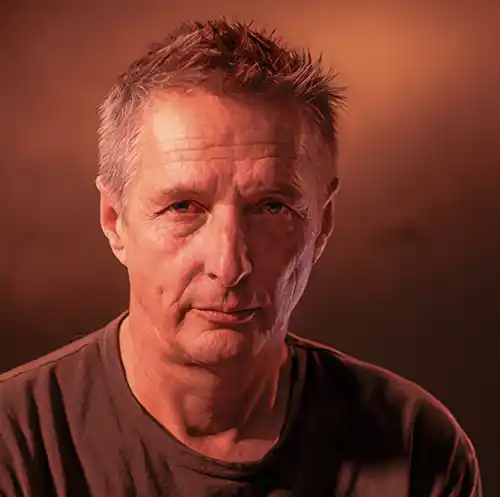
Jan du Toit is a South African wildlife cinematographer, documentary cameraman, filmmaker and visual storyteller. He qualified as a graphic designer and filmmaker from Pretoria Technikon and has continued his academic development through postgraduate study at the University of Cape Town.
Raised on a farm in central South Africa, Jan developed a deep love of nature, exploration and learning from an early age. That background, combined with a desire to create powerful images, led him into a career filming across more than 50 countries, from the natural landscapes of the Okavango Delta in Botswana to conflict affected environments such as Kabul, Afghanistan.
As a freelance documentary cameraman, Jan has worked for major international broadcasters including National Geographic Television, Discovery Channel, Animal Planet, CNN and the BBC. His work has given him rare access to different cultures, environments and human experiences, as well as a deeper awareness of the environmental challenges facing society.
Jan’s visual approach is informed by a wide range of interests, including natural science, history, music, journalism, film and art. He is inspired by the Dutch and Flemish Masters’ use of light, as well as by artists and photographers such as Obie Oberholzer, Nick Brandt, Alejandro Chaskielberg and David Goldblatt.

Visual Impact South Africa is one of the largest broadcast and film equipment rentals, sales and service companies in South Africa. As part of the international Visual Impact group of companies, we have access to a wide range of equipment and in-house technical expertise.
Visual Impact South Africa, with offices in Johannesburg and Cape Town, provides broadcast and production equipment rentals, workflow solutions, and technical support across Africa, including mobile editing and data management services. The company represents leading global brands such as Sony, ARRI, RED, Canon, and Blackmagic Design, and has facilitated major reality TV productions like I’m a Celebrity, Idols SA, MasterChef SA, and The Bachelor Germany.
Follow Us