A Day in the Life Working on a VR Production
15 Oct, 2025



2025 Copyright @ Visual Impact.
All Rights Reserved
I had the chance to do some Virtual Production using Unreal Engine like they used in the Mandalorian. Virtual production has revolutionized the filmmaking industry, blending physical and digital worlds to create immersive environments that allow directors and actors to see and interact with their scenes in real-time.
The Mandalorian brought virtual production into the mainstream spotlight, showcasing how LED volumes powered by Unreal Engine can replace traditional green screens. This technology creates realistic, interactive backgrounds that provide proper lighting and reflections, making the entire production process more immersive and efficient.
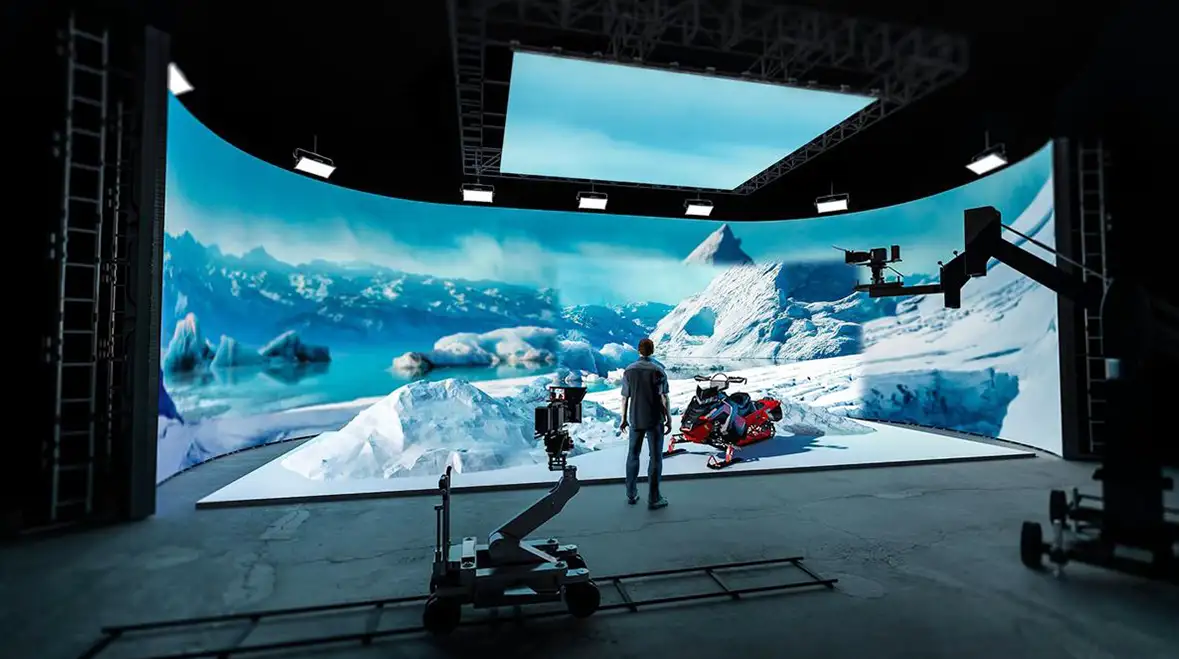
Unreal Engine's real-time rendering capabilities are at the heart of modern virtual production. Unlike traditional VFX workflows that require extensive post-production, Unreal Engine renders photorealistic environments in real-time during filming. This allows directors to see the final shot while on set, actors to interact with their digital surroundings, and cinematographers to capture proper lighting and reflections directly in-camera.
LED volumes—massive curved LED screens that wrap around the set—have become the foundation of virtual production. These walls display Unreal Engine-rendered environments in real-time, creating a seamless blend between physical sets and digital worlds. The result is footage that looks more natural, with realistic lighting and reflections that would be difficult or impossible to achieve with traditional green screen techniques.
Virtual production using Unreal Engine has transformed how we create films, allowing filmmakers to see their final shots in real-time while maintaining the flexibility and creativity of digital environments.
Virtual production offers numerous advantages over traditional filmmaking methods. Directors can make creative decisions on the spot, seeing exactly how the final scene will look. Actors can perform in realistic environments rather than imagining a green screen. Cinematographers can capture proper lighting and reflections directly, reducing the need for extensive post-production work. This streamlined approach saves time, reduces costs, and often produces better results.
As virtual production technology becomes more accessible and affordable, we're seeing it adopted across the industry—from blockbuster productions to independent films. Unreal Engine continues to evolve, adding new features and capabilities that push the boundaries of what's possible in virtual production. This technology is not just a trend; it's becoming the new standard for how films are made.
The experience of working with Unreal Engine for virtual production is eye-opening. It represents a fundamental shift in how we approach filmmaking, combining the best of physical and digital production techniques to create something entirely new and powerful.

Visual Impact South Africa is one of the largest broadcast and film equipment rentals, sales and service companies in South Africa. As part of the international Visual Impact group of companies, we have access to a wide range of equipment and in-house technical expertise.
Visual Impact South Africa, with offices in Johannesburg and Cape Town, provides broadcast and production equipment rentals, workflow solutions, and technical support across Africa, including mobile editing and data management services. The company represents leading global brands such as Sony, ARRI, RED, Canon, and Blackmagic Design, and has facilitated major reality TV productions like I'm a Celebrity, Idols SA, MasterChef SA, and The Bachelor Germany.
Follow Us