A Day in the Life Working on a VR Production
15 Oct, 2025


2025 Copyright @ Visual Impact.
All Rights Reserved
8 mins read
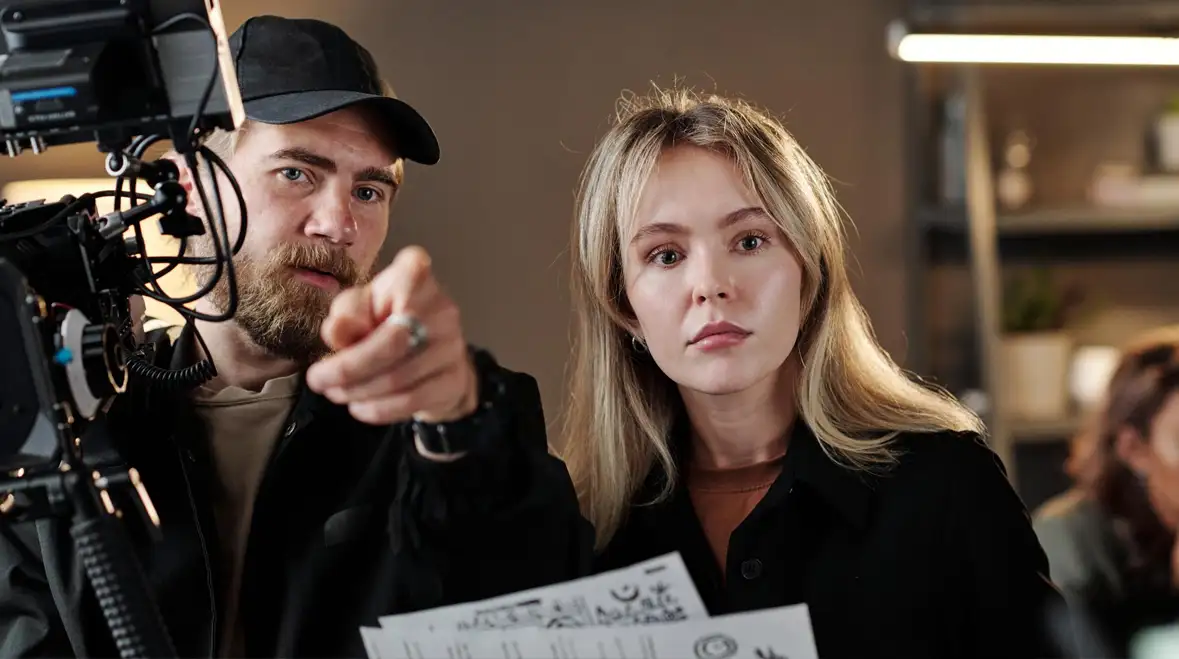
The edit doesn’t begin when you open your NLE. It begins the moment you choose which shot to take – and which to skip. In this final part, we close the loop: how coverage decisions made on set become the edit you actually deliver.
When an editor opens your rushes, they’re not admiring the lighting. They’re solving a puzzle: how do I get from the beginning of this scene to the end, in a way that feels inevitable? They’re looking for cut points – moments where one shot can give way to another without the audience noticing the join.
Those cut points depend almost entirely on what you shot. A clean exit from frame. A glance that motivates a cut to what the character is looking at. A reaction that lets the editor hold on to emotion rather than rushing to the next line. These moments don’t happen by accident. They’re built into coverage that was planned with the edit in mind.
“An edit is only as good as the choices it has. Coverage is how you stock the shelf.”
The practical implication: when you’re on set, ask yourself not just “does this shot look good?” but “where does this shot want to go next?” If you can’t answer that, the editor probably can’t either.
One of the hardest calls in production is knowing when a scene is covered and it’s time to move on. Linger too long and you burn time that another scene desperately needs. Leave too early and you discover the gap in the edit suite at midnight, with no way back.
The answer isn’t a fixed number of shots. It’s a mental checklist: Do I have a master? Do I have coverage of every significant beat? Do I have at least one clean close-up of the emotional peak? Do I have a way out if something doesn’t cut? If the answer to all four is yes, you’re covered. Move on.
Experienced directors develop an internal editor – a voice that watches the monitor not just for what’s in the frame, but for how it will sit next to everything else. That voice gets louder with practice, and it’s the single most useful thing you can develop as a filmmaker.
No matter how well you plan, some scenes will arrive in the edit with problems. Jump cuts where you need flow. Missing reactions. A performance in the wide that’s better than anything you got in the close-up. These aren’t failures – they’re feedback. The edit is the most honest assessment of your coverage decisions, and the best filmmakers treat it that way.
The discipline is to carry those lessons back to the next production. Keep notes during the edit on what you wished you’d shot. Build those notes into your coverage planning process. Over time, the gap between what you capture and what the edit needs will shrink – and so will the number of late nights in post trying to fix problems that started on set.
“Every difficult edit is a lesson in disguise. The question is whether you’re paying attention.”
Coverage is where production and post-production meet. It’s the conversation between the set and the edit suite – a conversation that works best when both sides understand each other’s language.
Across these three parts, we’ve moved from definition to planning to execution. The thread running through all of it is intentionality: coverage done well isn’t about shooting everything, it’s about shooting the right things, in the right order, with the edit already in mind.
Take that instinct onto your next shoot. Your editor will thank you.
THE SERIES
Part 2: Planning your coverage before the shoot
► Part 3: From coverage to cut – editing decisions that start on set

Visual Impact South Africa is one of the largest broadcast and film equipment rentals, sales and service companies in South Africa. As part of the international Visual Impact group of companies, we have access to a wide range of equipment and in-house technical expertise.
Visual Impact South Africa, with offices in Johannesburg and Cape Town, provides broadcast and production equipment rentals, workflow solutions, and technical support across Africa, including mobile editing and data management services. The company represents leading global brands such as Sony, ARRI, RED, Canon, and Blackmagic Design, and has facilitated major reality TV productions like I’m a Celebrity, Idols SA, MasterChef SA, and The Bachelor Germany.
Follow Us