12 mins read
How Reality Television Productions Manage Massive Data Volumes
Share:

12 mins read
A practical guide to why media handling is now a core engineering discipline on reality shows, not just a post production task.
Reality TV creates data problems very quickly. Manage massive data volumes, long shoot days, high recording formats and constant capture can overwhelm a production if media handling is treated as something to sort out later.
The strongest shows plan storage, transfer, sign off and redundancy as part of the engineering workflow from the start. At Visual Impact, network based systems, shared storage and disciplined client handovers help reduce failure points, speed up access and keep production moving.
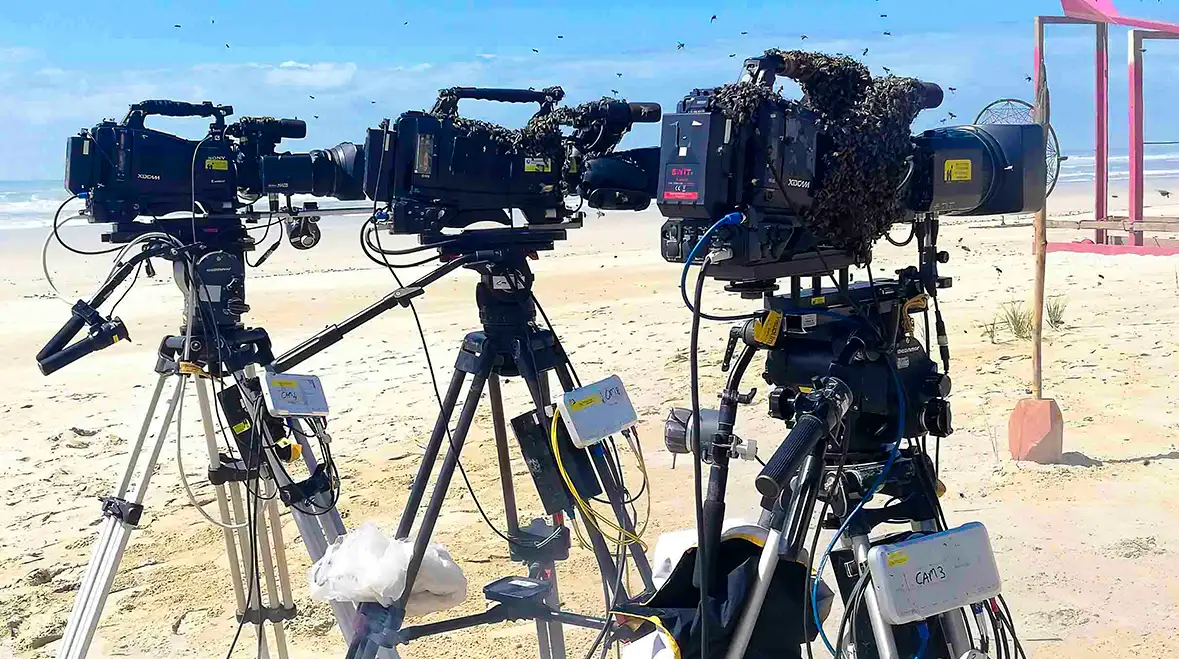
Reality television can generate far more media than many producers initially expect. Continuous capture, multiple cameras, long recording days and the need to preserve unscripted moments all push storage demand upward. Once higher resolution formats and multiple versions of footage are added, the volume rises even faster.
That is why data management on a reality production cannot be treated as an afterthought. It has to be designed as part of the shooting workflow. If it is not, the risks appear quickly: missed files, delayed handovers, unclear drive status, slow access for post teams and unnecessary pressure on set.
Tom van Greunen notes that Visual Impact has increasingly moved toward network based data management because physical SSD workflows introduce more points of failure. Drives can be misplaced, handovers can become unclear and files can be missed when media is repeatedly moved from person to person.
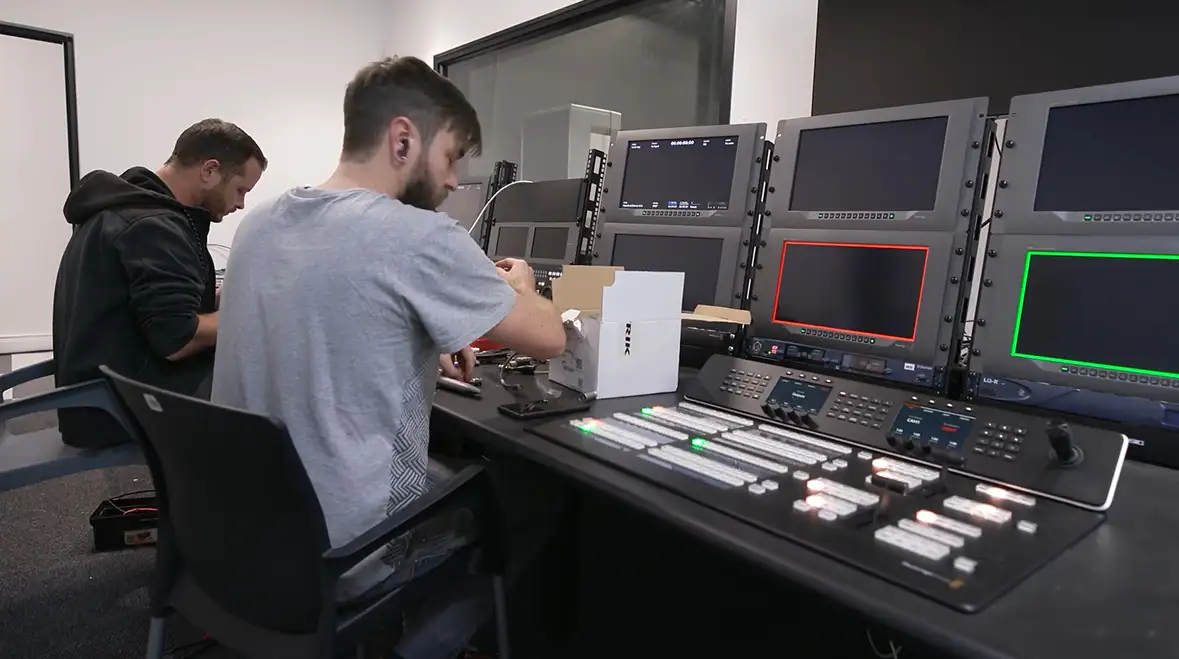
A network based workflow reduces that friction. Instead of relying on constant physical handling, footage lands in a controlled storage environment where it can be organised, checked and accessed more efficiently. Roedolph Louw adds a concrete technical layer to this by noting that Visual Impact uses Blackmagic Cloud Store units with up to 144 TB of storage on a 10 Gig network. That gives the production a stronger shared media foundation while improving speed and visibility across the workflow.
A good reality workflow starts by forecasting data volume before filming begins. Camera count, codec, frame rate, record duration, backup needs and editor access all influence how much storage will be required and how quickly that storage will fill up.
From there, the aim is to reduce unnecessary movement and confusion. Media should arrive in a controlled environment, remain clearly tracked and move through agreed handover points. Producers should know when footage is ready, engineering teams should know what remains active, and post teams should know where approved media lives.
One of Tom's most useful operational points is that Visual Impact advises clients on expected data volumes and prefers regular sign off cycles. The team generally does not like to hold footage for more than three days without client sign off because that delays drive reuse and creates uncertainty around what can safely be cleared.
This discipline matters on large productions. It keeps handover active instead of vague, supports clearer accountability and helps prevent last minute storage pressure. Just as importantly, it gives the client confidence that media is being managed deliberately rather than simply accumulated.
There was a time when producers could think of storage as something that happened after the cameras had done the important work. That is no longer realistic on complex reality formats. Today, media handling is part of the technical architecture of the show itself.
For that reason, strong data planning has become one of the clearest signs of engineering maturity. When a production can forecast volume, build the right storage environment, reduce failure points and keep footage moving safely, it becomes calmer, faster and more reliable from capture through to post.
The media plan should be locked before day one. At minimum, the production should confirm the following:
| Area | What needs to be clear |
|---|---|
| Storage capacity | Expected volume based on camera count, recording format, duration and backup needs. |
| Ingest workflow | Where footage lands, who checks it and how it is tracked through the day. |
| Access | Who needs footage quickly during the shoot, including editors, post supervisors and producers. |
| Redundancy | What backup or mirrored protection exists if a device or pathway fails. |
| Client sign off | How often footage is signed off so active media can be cleared and reused safely. |
It depends on camera count, codec, resolution, frame rate, record duration and backup policy. The important step is to estimate volume before filming begins instead of guessing once the shoot is underway.
A network based workflow reduces repeated physical handling, which lowers the chance of missed files, unclear handovers and drive related failure points.
Tom van Greunen notes that Visual Impact prefers regular sign off cycles and generally does not like holding footage for more than three days without client sign off.
No. On reality shows, media handling affects production directly because storage, transfer speed, access and handovers all influence how efficiently the shoot can keep moving.
Visual Impact helps producers scope camera systems, storage workflows, technical support and on set engineering so large reality shoots stay reliable from first capture to final handover.
Read the Reality-TV Article page
Data Management article | Pre-Production Engineering article
Email: reality@visuals.tv
Call: 021 468 6000

Visual Impact South Africa is one of the largest broadcast and film equipment rentals, sales and service companies in South Africa. As part of the international Visual Impact group of companies, we have access to a wide range of equipment and in-house technical expertise.
Visual Impact South Africa, with offices in Johannesburg and Cape Town, provides broadcast and production equipment rentals, workflow solutions, and technical support across Africa, including mobile editing and data management services. The company represents leading global brands such as Sony, ARRI, RED, Canon, and Blackmagic Design, and has facilitated major reality TV productions like I'm a Celebrity, Idols SA, MasterChef SA, and The Bachelor Germany.
Follow Us